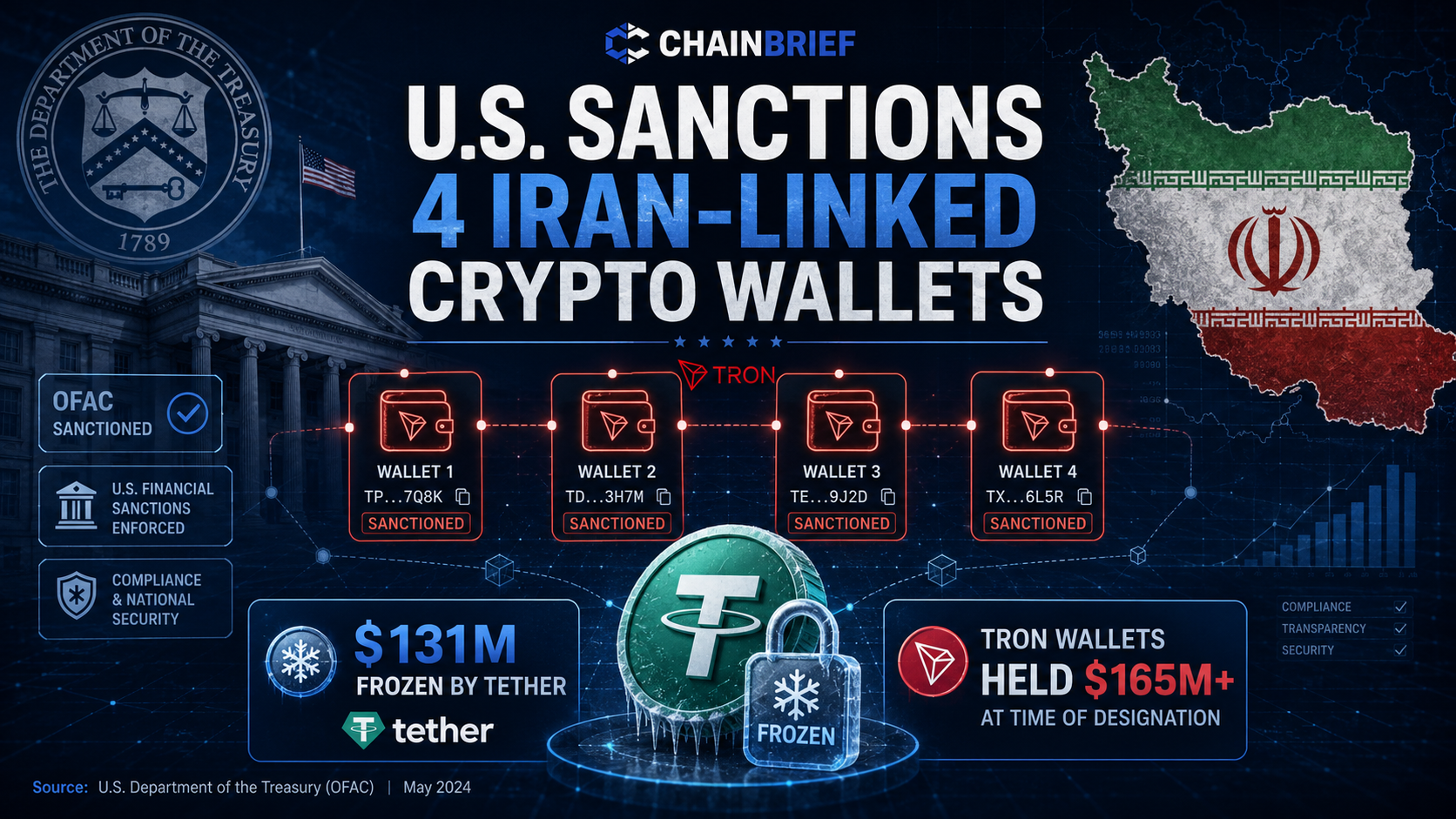
The U.S. has added four crypto wallets linked to Iran’s central bank to its sanctions list, while Tether froze $131 million associated with the addresses, CoinDesk reported.
The move centers on TRON-based wallets that reportedly held more than $165 million in total. According to the report, the freeze prevents those specific funds from being transferred or redeemed. It was not immediately clear from the available details when the wallets were sanctioned or how the holdings were distributed across the addresses.
The action adds another example of how stablecoin issuers and blockchain infrastructure can be drawn into sanctions enforcement. In this case, Tether’s intervention appears to have limited the movement of funds tied to the designated wallets, though the broader implications for the rest of the holdings were not specified in the source material.
The wallets were described as connected to Iran’s central bank, but the available information does not provide additional detail on the nature of the connection beyond the sanctions designation. No further information was included on any response from Tether, the U.S. government, or Iranian authorities.
For market participants, the episode underscores the continued role of compliance controls in crypto markets, particularly on public chains where addresses can be traced and restricted once identified. Still, the immediate scope of the action appears narrow: the freeze was aimed at specific wallets rather than the broader TRON network or the wider stablecoin market.
CoinDesk said the frozen funds were part of addresses that held more than $165 million in total. Based on the available report, $131 million was frozen, while the remaining amount was not accounted for in the excerpt provided.
The development comes as sanctions enforcement remains a recurring theme in digital assets, especially for stablecoins used in cross-border transfers. As with similar actions, the practical effect will depend on whether the targeted funds can be moved through other channels or whether additional restrictions follow. For now, the available facts point to a targeted compliance response rather than a wider market disruption.